
The Financial Paradigm Shift: Treating Florals as Capital, Not Expenses
For decades, the event floral industry has operated under a fragile, high-risk business model. Fresh stems are purchased, styled, enjoyed for a brief twelve hours, and then discarded. This creates an constant cycle of waste where up to 30% of raw materials end up in compost bins before they even reach the venue. For modern B2B event planners and florists, this waste is a direct drain on profitability. Shifting to an asset mindset means treating your floral inventory as capital equipment rather than a disposable cost of goods sold. When you invest in high-quality dried and preserved stems, you are purchasing assets that can be depreciated, rented out repeatedly, and repurposed across multiple event cycles.
To achieve a high wholesale dried flower ROI, event professionals must calculate the lifetime value of each stem. Instead of markup being a simple one-time transaction (e.g., cost times three), dried inventory allows you to charge rental fees that cover the initial cost of the product on its first outing. Every subsequent event using those same stems yields nearly 100% margin. This strategy changes how a business operates. It frees up cash flow and reduces the constant pressure of sourcing perishable products under tight timelines. In the competitive wedding industry, this predictability is a massive competitive advantage.
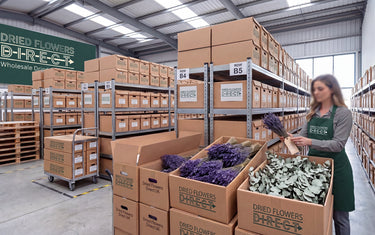
To succeed with this model, you must change how you buy. Sourcing low-grade, brittle stems from unstable retail middlemen will quickly lead to broken heads and high write-off rates. High-margin floral sourcing requires partnering with direct-import wholesalers who can supply robust, commercially cured products that handle the stress of repeated transport and styling. Operating from our central facility in Durham, we provide wedding florists with access to large-scale, consistent inventory that is built for professional reuse.
Direct Answer: How to Build a High-ROI Floral Business Asset
To build a high-ROI dried floral business, you must treat your inventory as a depreciating physical asset. This involves sourcing robust, premium-grade preserved and dried stems, designing modular installations that can be easily dismantled without stem breakage, and maintaining strict storage protocols to protect items from damp conditions. By renting rather than selling arrangements, a single batch of wholesale inventory can generate revenue across five to ten events, drastically reducing material costs.
"Treating dried stems like structural inventory rather than fragile, single-use material completely changes your pricing power. A preserved eucalyptus stem can work five weddings if handled correctly, turning a one-time purchase into a recurring source of profit."
—— ZOE, Lead Florist at Dried Flowers Direct
High-Margin Floral Sourcing: The Core of Your Balance Sheet
Not all dried flowers are created equal. Some botanical species dry into tough, woody structures that can withstand years of handling. Others are delicate, dropping petals at the slightest breeze. To build an optimized inventory, florists must select species based on structural durability, color retention, and versatility. Preserved foliages are particularly valuable assets because the glycerin preservation process keeps the leaves supple, preventing the shattering associated with traditional air-dried greenery.
Eucalyptus remains the undisputed king of event foliage. By stocking versatile colors, you can adapt your stock to fit moody autumn weddings or bright summer ceremonies. Compare these commercial-grade preserved eucalyptus options to see how they can form the backbone of your rental inventory:


Beyond foliage, your inventory needs focal elements and filler flowers that retain their color under harsh venue lighting. Yellow and neutral tones are exceptionally stable, whereas deep reds and purples require careful handling to avoid fading. Stems like German Statice and Gomphrena provide excellent bulk and texture while maintaining their structural integrity over many months of storage. When sourcing, focus on building a library of textures—mixing soft, airy fillers with bold, structural elements to create depth in your designs.
Maximizing ROI: Safeguarding Stems in the UK Climate
The damp, unpredictable British climate presents unique challenges for commercial floral inventory management. High humidity can cause preserved stems to "sweat," releasing excess dye and glycerin, while excessive moisture can lead to mold on dried materials. Storing your assets in drafty, unheated storage units during a damp winter is a quick way to ruin thousands of pounds of inventory. To protect your investment, you must establish strict storage protocols based on professional guidelines, such as the RHS commercial drying and conservation standards.
Your storage area must be kept dry, dark, and well-ventilated. Standard plastic storage bins should be avoided because they trap ambient moisture inside, creating a micro-greenhouse effect. Instead, use breathable cardboard archival boxes lined with acid-free tissue paper. Silica gel packets are excellent, low-cost tools to place inside each box to absorb any lingering humidity. When packing away installations, stems should be laid flat, with heavy materials at the bottom and delicate heads supported by tissue paper nests.
For more detailed advice on protecting your products between bookings, read our practical guide on how to store dried flowers. Taking these steps prevents the common issue of stems softening and dropping their heads, which can quickly ruin your margins.

Event Floral Inventory Optimization: Designing for Modular Reusability
To run a highly profitable event floral business, you must design with dismantling in mind. If an installation is constructed by gluing stems directly into floral foam, those stems are lost forever once the event ends. This defeats the purpose of the asset mindset. Instead, utilize mechanics that allow for non-destructive assembly, such as chicken wire cages, reusable metal floral frogs, and eco-friendly moss wraps.
Create modular "building blocks" that can be easily transported and combined on-site. For example, a series of pre-made dried flower clouds can be hung together to create a massive installation above a head table, and then easily split apart to serve as bar decorations or entrance displays at the next booking. This approach speeds up setup and pack-down times on busy weekends, reducing labor costs and lowering the risk of transport damage.
When selecting materials for these reusable modules, opt for highly resilient varieties. Thistles, seed pods, and preserved grasses are excellent choices because their rigid structures can handle being packed, unpacked, and handled by venue staff. Our popular preserved flowers for weddings guide outlines how to combine these sturdy elements with delicate focal blooms to achieve a high-end look without sacrificing durability.

Sustainable Floral Business Strategy: Financial and Ecological Alignment
Modern consumers, particularly wedding couples, are increasingly prioritizing sustainability. However, fresh floral design often relies on carbon-heavy international air freight and chemical-laden single-use plastics. Embracing a sustainable floral business strategy by utilizing dried and preserved materials allows you to appeal directly to eco-conscious clients while simultaneously boosting your bottom line. Since dried flowers can be stored and transported by ground freight, their carbon footprint is significantly lower than fresh imports that require continuous refrigeration.
Furthermore, because our supply chains adhere to strict DEFRA horticultural import guidelines, you can reassure clients that your materials are sourced responsibly. By eliminating single-use floral foam and reducing green waste, your business can market itself as a truly zero-waste option. This premium branding allows you to command higher booking fees, proving that ecological responsibility and financial profitability can work hand-in-hand.
To understand the high standards required of a professional trade partner, we recommend reviewing our quality guide for UK florists. Partnering with an established importer guarantees that your sustainable designs are built on premium, ethically sourced inventory.


Commercial Inventory Asset Comparison
The table below compares key botanical categories to help you select products that deliver the highest return on investment:
| Product Category | Average Lifespan | ROI Potential | Primary Risk | Best Use Case |
|---|---|---|---|---|
| Preserved Foliage (e.g., Eucalyptus) | 2–3 Years | Exceptional (High) | Glycerin sweating in high humidity | Arches, installations, table runners |
| Dried Grasses & Seed Pods | 3+ Years | High | Dust accumulation, shedding | Structural backdrops, large urns |
| Preserved Focal Blooms (e.g., Roses) | 1–2 Years | Medium | Petal bruising, rough handling | Bridal bouquets, low centerpieces |
| Air-Dried Florals (e.g., Lavender, Lona) | 1 Year | Medium-High | Stem brittleness, shattering | Rustic themes, bud vases |
Step-by-Step Dried Flower Asset Management Guide
Arrival Inspection and Stem Prepping
As soon as your shipment arrives from our Darlington facility, unpack the boxes carefully. Shake each bunch gently to release loose petals. Trim any bent or damaged stem ends with sharp shears. If you notice any slight compression from transit, gently tease the flower heads back into shape by hand, giving them room to breathe.
Inventory Cataloguing and Labeling
Treat your flowers like valuable equipment. Photograph and log each bunch into your inventory software. Assign a unique ID to every storage box, detailing the quantity, color, and date of purchase. This allows you to track exactly how many times a particular set of stems has been hired out, giving you real-world data on your actual ROI.
Non-Destructive Event Assembly
During setup, avoid using hot glue, wire ties, or floral foam on your premium stems. Instead, construct your installations using reusable mechanics like heavy-duty chicken wire, moss, or waterless floral tubes. This keeps the stems undamaged during the event, allowing you to dismantle the arrangement safely at the end of the night.
Post-Event Restoring and Sanitisation
After reclaiming your inventory, inspect each stem for damage, dust, or moisture. Use a soft-bristled brush or a hairdryer on a cool, low setting to gently blow away any dust or lint gathered during the event. If stems have absorbed any dampness from venue air conditioning or rain, leave them to dry in a warm, low-humidity room before packing them away.
Archival Boxing and Climate-Controlled Storage
Lay the dry, cleaned stems flat in sturdy, breathable cardboard boxes lined with clean tissue paper. Add several fresh silica gel packs to absorb any humidity. Store the boxes in a dark, dry, temperature-controlled environment away from direct sunlight, drafty walls, and damp concrete floors to keep them pristine for their next booking.
Concluding Summary
Transitioning to an asset mindset is a highly effective way for event florists to increase their profitability and reduce waste. By treating dried and preserved flowers as long-term business investments rather than disposable, single-use expenses, you can create a highly predictable, high-margin revenue model. Sourcing high-quality, durable materials, storing them carefully to protect them from the damp UK climate, and designing with reusability in mind will ensure your floral inventory pays for itself many times over. Partnering with a reliable importer like Dried Flowers Direct gives your business access to the premium stock and fast delivery needed to make this sustainable business model work.
Ready to Scale Your Event Business Margins?
Stop treating flowers as a single-use cost. Build your high-ROI floral inventory today with our premium range of wholesale dried and preserved stems. We dispatch rapidly from our UK warehouse, offering fast 1-3 days express delivery to keep your busy event schedule running smoothly. For bespoke trade orders, email our team at info@driedflowersdirect.co.uk.
Shop the Wholesale CatalogWe process all orders with a daily cutoff time of 12:00 PM. Our standard UK delivery typically arrives within 10 working days, while our Express Delivery option delivers your premium stems directly to your studio in 1-3 working days.
Yes, we offer a free Click and Collect option from our warehouse in Durham. Simply select the collection option at checkout, and our team will prepare your order for easy pickup.
We offer a 14-day return policy for unused items in their original packaging. Please note that we are currently unable to accept returns or exchanges on wedding-specific floral products due to their delicate nature.
To keep your preserved foliage looking its best, store it in a dry, climate-controlled space between 15°C and 22°C. Keep stems away from direct sunlight, high humidity, and damp environments to prevent fading or leaf stickiness.
At this time, Dried Flowers Direct focuses on providing high-quality botanical products and fast shipping within the UK, and we do not offer international shipping.
