
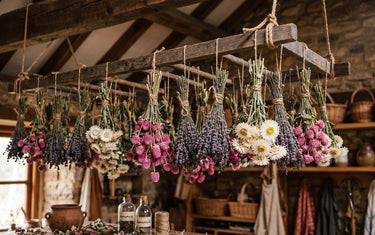
Selecting the Ideal Flora for Workshop Material Packs
Organizing a successful craft workshop requires reliable, robust materials. Unlike commercial florist arrangements that remain stationary, workshop stems are handled repeatedly by beginners. This physical interaction means you must select botanical varieties that dry with strong structural integrity. High-moisture flowers like lilies or thick succulents rot rather than cure, whereas low-moisture species preserve beautifully with minimal fuss.
How do you dry flowers successfully? The most reliable professional method is to harvest blooms just before full opening, strip excess foliage, and hang them upside down in a dark, dry, well-ventilated space for two to three weeks. Alternatively, you can use silica gel for rapid color retention or traditional flower presses for flat craft applications.
When curating materials for your handcraft classes, look for natural heavy-lifters. Gomphrena, lavender, and ammobium are ideal choices. Their low natural humidity levels mean they cure quickly and maintain their color saturation. They also tolerate the rough-and-tumble of amateur handling without dropping all their petals on your workbenches. Understanding these properties helps you design better workshop kits and manage inventory waste effectively.


Adding these reliable elements to your workshop inventory minimizes wastage and keeps costs stable. For example, our lavender and ammobium lines are dried under precise conditions, ensuring they arrive at your studio ready for immediate use. Integrating these sturdy varieties prevents the frustration of stems snapping mid-class, which is a common complaint among workshop attendees. If you want to expand your knowledge of classic species, see our professional guide on dried lavender properties.
The Mechanics of Traditional Air-Drying: Managing UK Humidity
Air-drying is the oldest and most cost-effective preservation method. It relies on ambient air circulation to slowly extract moisture from plant tissues over several weeks. Hanging the stems upside down is crucial because gravity forces the sap into the flower heads, keeping the stems straight. If you dry them upright, the heavy heads droop, leaving you with crooked, unusable stems for wreath-making or floral crowns.
The UK’s damp, unpredictable climate poses a significant challenge for this traditional approach. High moisture levels in cold studios or home garages encourage mold growth rather than drying. To combat this, ensure your drying space has a consistent ambient temperature and excellent cross-ventilation. Using a small domestic dehumidifier can make a massive difference in keeping relative humidity below the critical 50% threshold. Professional standards defined by the RHS horticultural preservation recommendations highlight how essential climate control is for clean curing.
Additionally, keeping your drying area dark is vital. Direct sunlight acts as a natural bleaching agent, stripping away vibrant pinks, purples, and yellows, leaving you with dull, faded materials. Professional growers and master florists monitor these factors constantly to maintain inventory standards. By protecting your hanging bunches from dust and UV rays, you ensure the final craft product looks clean and professional.
"Many workshop hosts struggle with mold and brittle stems because they ignore room humidity. In our Darlington warehouse, we keep moisture levels strictly controlled. If you are prepping materials for a craft workshop, invest in a simple hygrometer; maintaining relative humidity below 50% is the secret to rich, vibrant petals." — ZOE, Lead Florist at Dried Flowers Direct
Chemical and Mechanical Alternatives: Silica Gel and Flower Presses
For flowers with complex, multi-layered petals like roses or hydrangeas, traditional air-drying often results in shriveled, distorted shapes. This is where chemical desiccation using silica gel excels. Silica gel consists of tiny, highly porous silicon dioxide crystals that rapidly adsorb moisture directly from the plant tissues. By burying flower heads in a container of silica gel, you preserve their exact three-dimensional structure and vivid colors in as little as three to seven days.
While silica gel is highly effective for dimensional displays, pressing remains the gold standard for flat crafts. Flower presses use layers of cardboard and absorbent paper to apply uniform pressure over two to four weeks. This technique is perfect for making framed botanical art, custom stationery, or resin jewelry. When pressing, ensure you use acid-free parchment paper to prevent the petals from browning. Scientific research from the Kew Gardens scientific drying guidelines emphasizes that keeping specimens flat and dry prevents cellular degradation and structural collapse.

Using pre-curated crafting boxes is a brilliant option for workshop organizers who cannot afford the time or space to dry everything themselves. These kits provide a diverse mix of colors and textures, ready-made for instant assembly. This allows you to focus on teaching your students rather than managing months of unpredictable drying inventory in your studio. If you want to learn more about the differences between home-drying and wholesale dried floral supply, read our resource on the best flower drying methods.
Drying Techniques Compared: Choosing the Best Method for Your Brand
Every flower drying method has distinct advantages and trade-offs. Choosing the right one depends on your specific product line, workshop curriculum, and space constraints. The table below outlines the key differences to help you select the most efficient technique for your brand's operational needs.
| Method | Drying Time | Color Quality | Structural Form | Best Botanicals |
|---|---|---|---|---|
| Air-Drying | 2–3 Weeks | Moderate / Vintage | Straight Stems | Lavender, Gomphrena, Grasses |
| Silica Gel | 3–7 Days | Excellent / Vibrant | Full 3D Shape | Roses, Hydrangeas, Peonies |
| Pressing | 2–4 Weeks | Good / Flat | Completely Flat | Pansies, Ferns, Daisies |
| Glycerin Preserving | 1–2 Weeks | Subdued / Darker | Pliable / Supple | Eucalyptus, Beech, Oak Leaves |
As the table demonstrates, air-drying is ideal for high-volume, cost-sensitive production, while specialized chemical techniques are better for premium, delicate projects. For workshop hosts, maintaining a balance of these materials ensures you can cater to various design styles, from rustic country wreaths to modern minimalist frames.
Optimizing Your Studio Space for Large-Scale Drying and Storage
If you run regular workshops, scaling up your drying operation requires careful space management. Overhead space is your most valuable asset. Installing suspended ceiling racks or using heavy-duty clothing racks with S-hooks allows you to dry hundreds of bunches simultaneously without using valuable floor space. Always space the bunches at least four inches apart to facilitate healthy airflow and prevent moisture pockets.
Once dried, storing your inventory correctly is just as important as the drying process itself. Avoid plastic storage boxes at all costs. Plastic traps residual moisture, creating a greenhouse effect that quickly turns your pristine flowers moldy. Instead, opt for breathable cardboard boxes lined with acid-free tissue paper. Adding a few reusable silica gel packets to each box will absorb any ambient moisture that creeps in during wet winter months.
For details on maintaining your cured stock over long periods, explore our comprehensive guide on dried flower storage. Sourcing your bulk materials from our Darlington warehouse ensures you always have access to professionally cured, mold-free inventory, saving you valuable studio space and preparation time.


Step-by-Step Air-Drying Guide for Workshop Stems
Selection and Harvesting
Harvest your flowers on a warm, dry afternoon once the morning dew has fully evaporated. Select blooms that are just starting to open; if they are already in full bloom, they will shed their petals during the drying process. Make sure to choose strong, healthy stems with no visible signs of damage or decay.
Stem Preparation and Leaf Stripping
Remove all lower leaves and foliage from the bottom two-thirds of the stems. Excess foliage holds water, slows down the drying process, and dramatically increases the risk of mold in damp climates. Trim the stem ends cleanly at a 45-degree angle with sharp floral shears to prevent crushing the vascular tubes.
Secure Bunching with Rubber Bands
Group the stems into small bunches of eight to ten. Bind the stems tightly using a rubber band rather than twine or wire. As the stems dry, they shrink; a rubber band will contract with them, whereas twine will become loose, causing stems to slip out and break during storage.
Suspend in an Optimal Environment
Hang the bundles upside down from a drying rack, beam, or hook. Ensure they are placed in a dark, warm, and well-ventilated room. Avoid bathrooms, kitchens, or damp basements where humidity fluctuates. Keep a relative humidity level below 50% using a domestic dehumidifier if you are working in wet British winter conditions.
Testing and Bulk Storage
After 14 to 21 days, inspect the flowers. Touch the center of the bloom gently to ensure it is completely dry. Bend a stem slightly; it should snap cleanly like a dry twig. If it bends without snapping, leave it to dry for another week. Store the finished bunches flat in breathable cardboard boxes with silica packets.

Summary
Drying flowers is a rewarding, traditional craft that adds immense value to handcraft workshops and creative businesses. By understanding the science of air circulation, moisture control, and botanical selection, you can produce beautiful, durable materials for any project. While home-drying is a fantastic skill, sourcing professionally cured stems from our Darlington warehouse ensures your workshops always run smoothly with reliable, vibrant, and sturdy stock.
Ready to Stock Your Next Creative Workshop?
Skip the weeks of waiting and potential mold risks. Dried Flowers Direct offers premium wholesale floral materials, shipped quickly from our UK warehouse. With reliable nationwide shipping, you can secure high-quality stems for your craft classes without delay. For specialized bulk custom inquiries, reach out to us at info@driedflowersdirect.co.uk.
Explore Our Full Wholesale CollectionDried flowers can last up to 1-3 years if kept dry and out of direct sunlight. For busy workshops, sourcing from our Darlington wholesale dried flower collection ensures premium quality that doesn't crumble during handling.
Yes, eucalyptus can be air-dried, but it can become brittle. For a soft, pliable leaf that is perfect for wreaths, we recommend using preserved varieties like our

Drying them in high-humidity areas or direct sunlight. High humidity leads to mold, while sunlight bleaches the natural pigments. Always dry in a dark, dry space, and read our expert storage guide to avoid costly inventory losses.
Stems often snap if they are over-dried, harvested too late, or kept in overly arid environments. To prevent this, include naturally sturdy stems like

Wrap the remaining stems gently in acid-free tissue paper and store them flat in a breathable cardboard box. Avoid plastic boxes which can trap moisture and cause rot. You can restock your supplies easily with our fast 1-3 days UK delivery.
